We landed at Honolulu Airport at 6:30am Hawaiian time, after an eight hour journey from Auckland. Despite the fact that I’d had somewhat of a restless sleep, I felt wide awake and prepared to start the day, despite the film of grime that had developed across my teeth.
As we disembarked the plane, we were shuffled into the terminal by local Air New Zealand staff. Now, the Honolulu Airport is currently undergoing a refurbishment however as the airport is rather large, it’s obviously going to take a while.
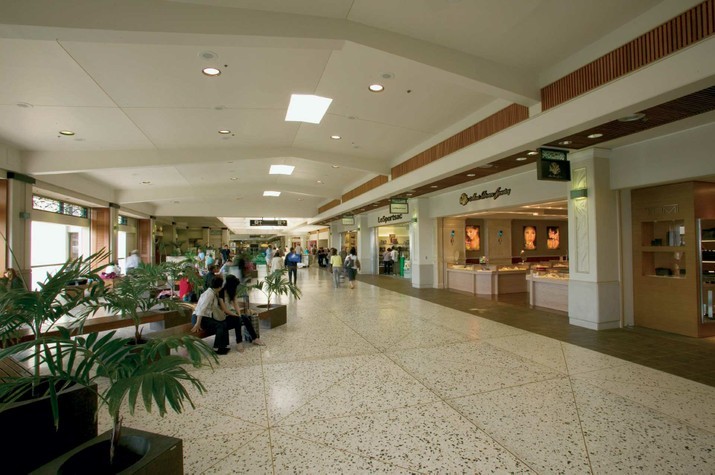
Stepping into the airport is like taking a time capsule back into the late sixties. There is a tonne of wood panelling and brown and tan as far as the eye can see, with loads of gold fixtures and fronded plants in huge, concrete garden pots dotted throughout the terminals. I turned to Christian who I knew would be enamoured by the decor of the airport and he whispered to me, ‘you know, Elvis once walked these halls‘. I rolled my eyes and obediently walked forward, ushered single file toward the exterior of the terminal where I could see a pair of buses that looked like they belonged on the island of Rarotonga.
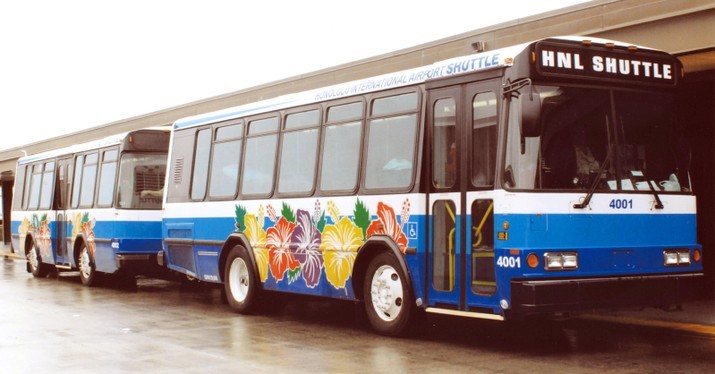
We boarded one of the buses and waited a few minutes to ensure everyone had alighted, and then were transported to security clearance and baggage claim in another terminal. I was astounded at the size of the airport, and commented to Christian about how huge the place was. We idly chatted as I attempted to quell the churning in my stomach as we prepared to meet the oft-feared TSA.
The Transportation Security Administration (TSA) is an agency of the U.S. Department of Homeland Security that has authority over the security of the traveling public in the United States. It was created as a response to the September 11, 2001 attacks and their reputation as no-nonsense, serious men and women of law is infamous.
On average, the TSA screens approximately 2 million people per day throughout the United States and its’ two territories Puerto Rico & Guam.

In Fort Worth in 2012, a TSA officer confiscated a live 40mm high explosive grenade from a passengers luggage; the fact that firearms, live animals and drugs are still attempting to be smuggled in and out of the US, coupled with the world as it exists today post 9/11 has proven the need for the country to take its’ border security very seriously.
The country’s currently political climate regarding immigration was also a cause for concern, especially during a time where President Trump has expressed definitive and divisive opinions on immigration.
At the end of January this year, President Trump decreed executive order temporarily banning travel from seven Muslim-majority countries. The move sparked protests around the country as people who had previously been approved to come to the United States were being detained at airports and there were also indications that the ESTA visa waiver program would be scrapped in favour of stricter visa-issuances for all foreign visitors.
Although the order was blocked in appeals courts, The Donald has reportedly signed a new executive order, removing Iraq from the list of countries that would be impacted by the travel ban and stating that the order would apply to new visa applicants only. This will mean that travellers who’d previously been blocked by the initial order despite having legitimate visa documentation may now be allowed entry to the United States.
As a New Zealand born citizen, I rarely worry about travelling abroad, for the simple fact that our passports are ranked as one of the best to have in the world. This is based on the number of countries (170) that permit entry to citizens of New Zealand without requiring visas.
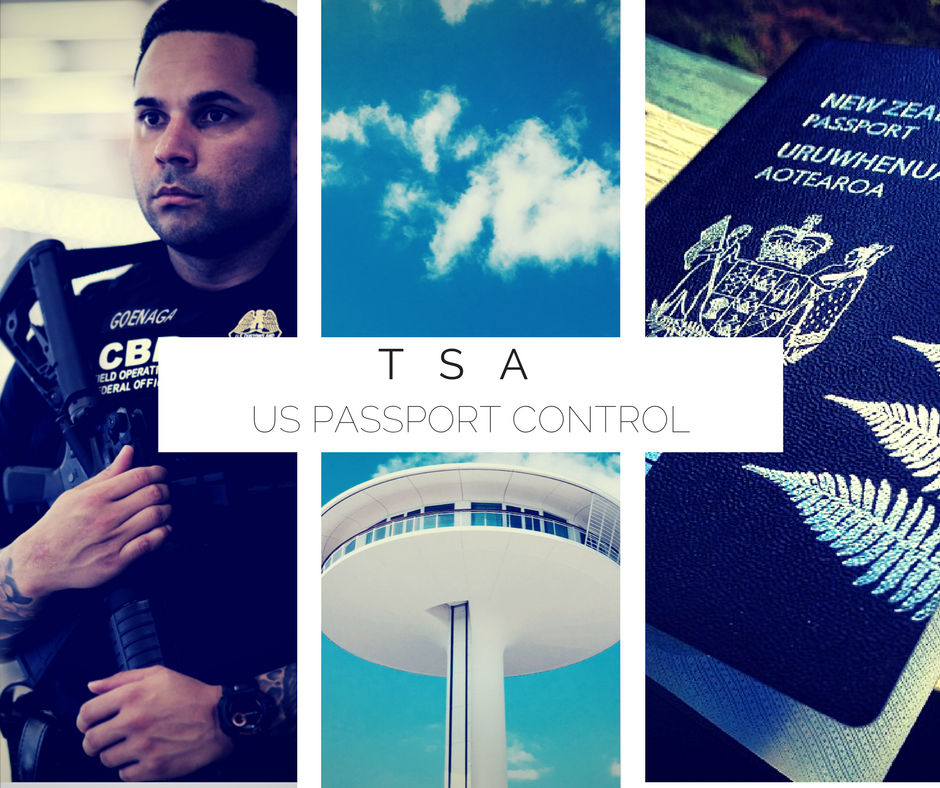
Upon reaching passport control, we were asked to enter our passport details into a self service machine that scanned our biometric passports and took our photos. This printed out a slip that we were required to present to the customs officer at security, along with out passports.
As we approached the officer, I hoped that we would get someone nice, or at least someone who would be interested in the fact that we hailed from the land of Hobbits, Orcs, Gandalf and Middle Earth and less interested in my husband’s birthplace.
Christian was born in Lima, and spent several years living in his country of origin Peru before emigrating with his family to New Zealand. At this stage in the game, he is a naturalised citizen travelling on a New Zealand passport and has been a resident in Auckland for the last 27 years. On this basis, you would assume that the length of time he’d been away from South America that the cultural stereotypes that come along with hailing from this part of the world would have lapsed, right? Wrong.
Even our own friends have made jokes about Christian being an undesirable, being ‘randomly selected’ at airports internationally because of his ‘Mexican sounding name’, laughing at his name being that of someone who is quite obviously a Columbian drug mule…guess what, team? It’s not funny. People of colour are routinely treated poorly, or differently because of their given names or familial lineage. The very fact that we cannot make these exact jokes to an anglo-saxon makes these racist. So stop it. It’s not funny. It’s lame and I’m sure you’re smarter than that.
Because we seem to be the most blessed people in the world, our customs and border protection officer (also a department of Homeland Security) was a Mexican gentleman named Luis.
He greeted us warmly welcoming us to the country and nonchalantly asked Christian about his country of birth, how long he’d lived in the country and how he’d ended up in New Zealand. ‘Peruano!’, he exclaimed repeatedly stating that he’d not met many in his line of work and that it was nice to meet Christian.
His language was interspersed with Spanish, and I smiled and breathed a sigh of relief. We came to the US with the explicit intention of enjoying a family vacation and I had been convinced by so many people that we would be treated as hostile, threatening individuals who were intent on causing havoc in the USA – thankfully, my experience couldn’t have been more opposite.
We were fingerprinted and our passports scanned and stamped, before being bid farewell by Luis, where he imparted some words to Christian – ‘you’re a good man, a mano. Take care of your family, you’re doing it right’.
Thank you, Luis!
Charli x


 charliespinoza.com
